One thread
Ask in your own words and get the answer in the same sitting. No ticket, no queue.
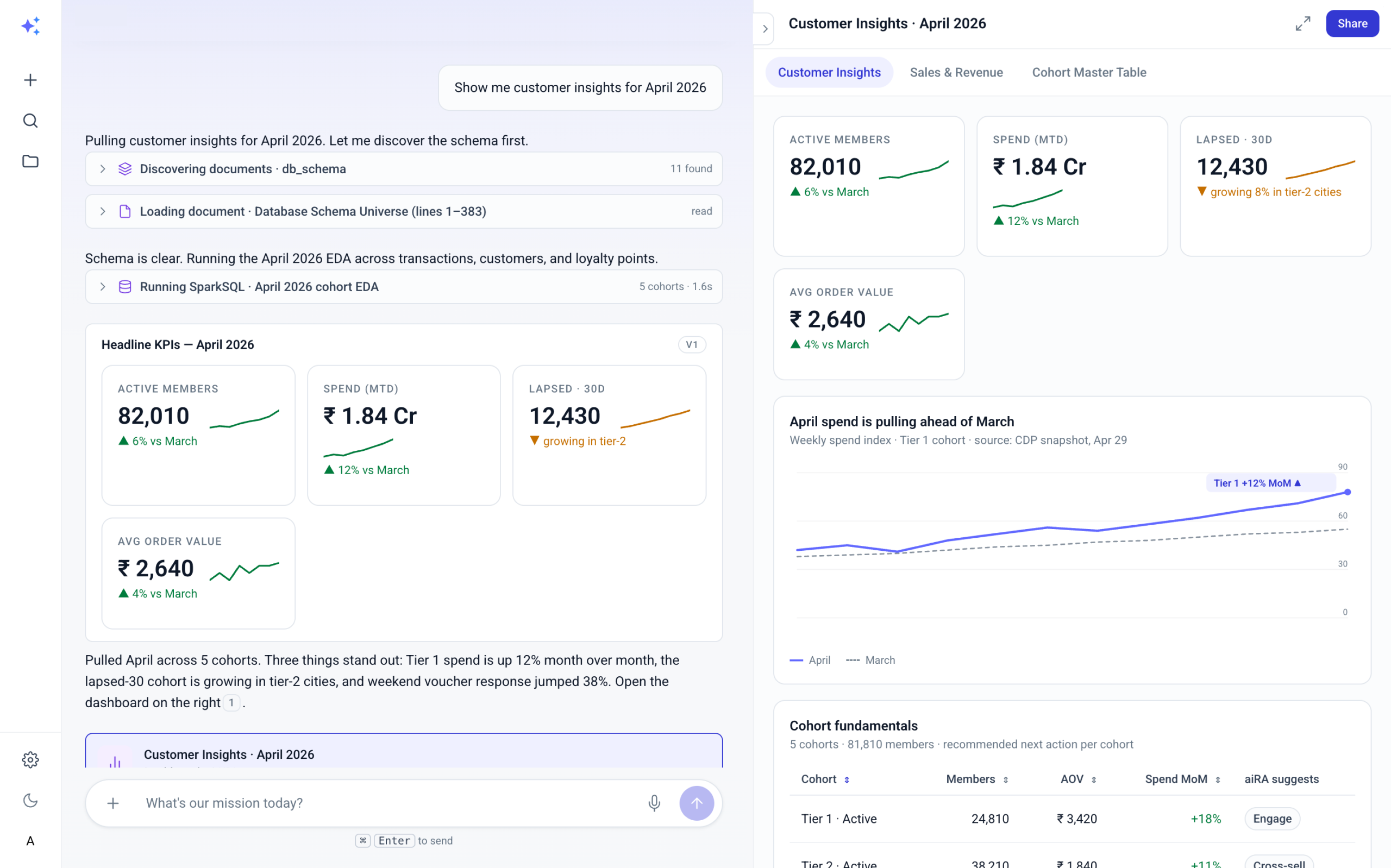
Ask in plain language. aiRA reads the warehouse you already have, shows its reasoning, and builds the move for a person to approve.
What it does
Not a report, and not a chat. The answer arrives with the reasoning that produced it and the move it implies, built against your own data and held for a decision.
Ask in your own words and get the answer in the same sitting. No ticket, no queue.
The segment and the journey are built in the same thread, then held until a person approves.
Playbooks ship pre-built, and your own rules layer on in days rather than months of modelling.
The query, the assumptions and the sources come back with every answer.
It reads loyalty terms like lapsed, liability and tier the way your programme means them.
How it fits
You already own the warehouse. You already own the channels. What is missing is the judgement in between, and today that runs on analyst tickets and Monday meetings.
System of record




Reads where your data already sits

The intelligence layer
System of action


Executes anywhere, in any channel
aiRA reads your data in place. No migration, no rebuild.
It plugs into what you already own and pushes to what you already run.
Every move waits on your approval before it goes live.
Security
 SOC 2 Type II
 CCPA
 GDPR
Also ISO 27001 and PCI DSS certified, and PDPA compliant. HIPAA-capable under a BAA. Aligned to the NIST AI Risk Management Framework and the EU AI Act.
Getting started
Four phases with a named output each, run by a Capillary success manager. Your team is needed in the first and the third.
Your business context, your tiers and the questions your team actually asks.
OutputA signed-off requirements document
aiRA is pointed at your warehouse and trained on your context. Read access is all it needs.
OutputA configured instance on your data
Around thirty representative questions, checked against your own numbers until the gap closes.
OutputA parity report you sign off
Seats get access, the approval gate is wired to the people who own it, and the credit ledger starts.
OutputaiRA live for your teams
The parity gate
99% agreement, minimum
aiRA is not switched on for a brand until it reproduces your own reporting at least that closely, so the first answer your team sees is one you can check against a number you already trust.
Thirty minutes, one real question, answered live. We reply within one business day with a time and the security brief.